
Classes
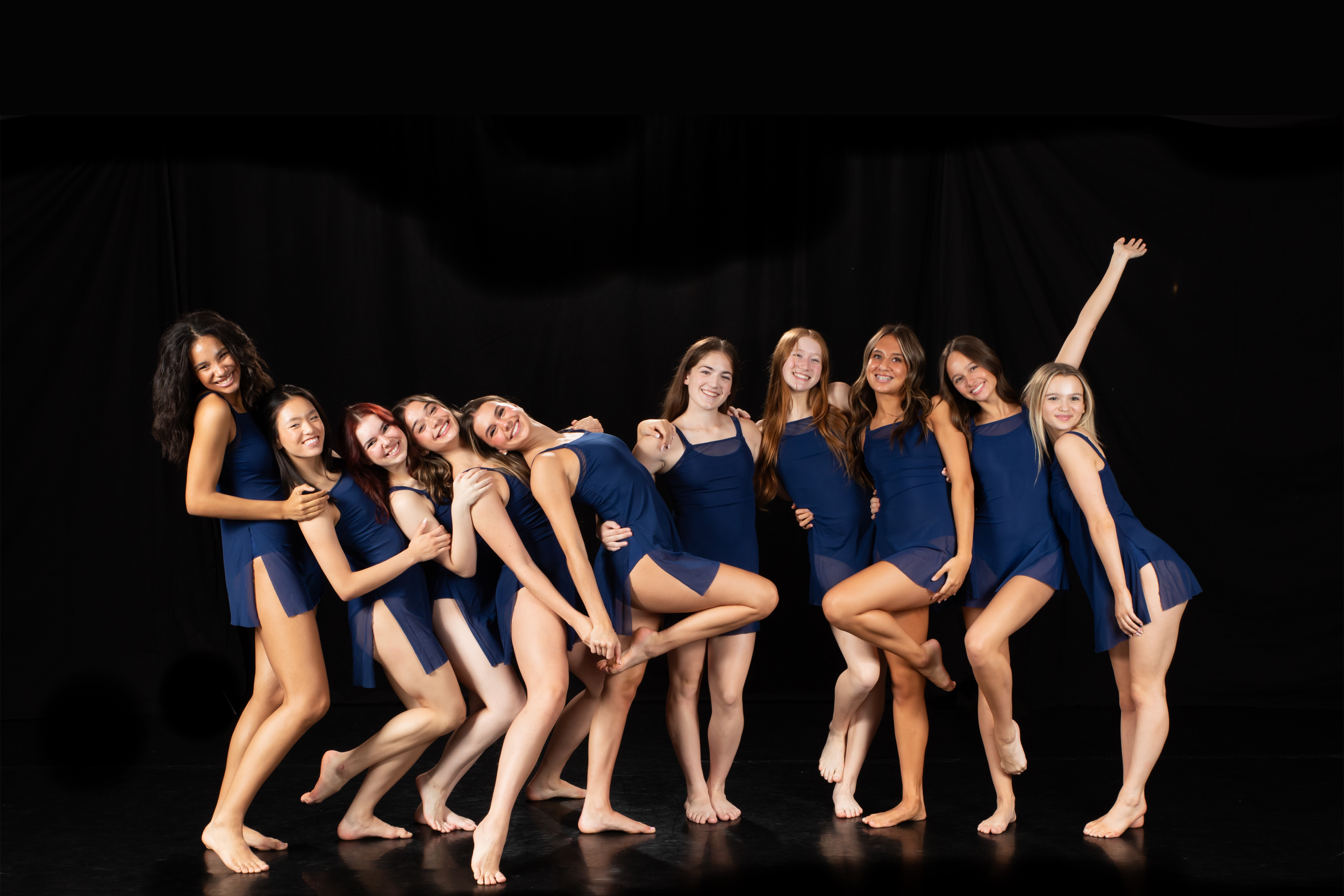
Whether your dancer is just starting out or is an experienced performer, Embody Dance Collective offers instruction for all ages and skill levels. Dancers are leveled by Embody Staff. We offer classes across the following levels: Pre-Dance, Levels 1-4, Boys, Adult
Ballet
Ballet is the foundation of all concert dance. Students build strength, flexibility, balance, and grace through classical technique. Dancers learn vocabulary and steps while dancing at the barre, center and across the floor. The discipline and body awareness they gain carry into every other style.
Conditioning / Progressive Ballet Technique (PBT)
This class builds the strength supporting great technique. Progressive Ballet Technique uses exercise balls and targeted exercises to train core stability, alignment, turnout, and balance. The class creates muscle memory for correct technique to aid class work in concert dance styles. Along with flexibility and conditioning work, cross training helps dancers improve faster and stay injury-free.
Contemporary
Contemporary dance is where technique meets artistry. Drawing from ballet, jazz, and modern dance, it combines strong technical foundations with fluid, grounded, and unexpected movement. Students explore floor work, improvisation, weight shifts, and the full range of the body's motion, from soft and suspended to sharp and powerful. Most of all, contemporary encourages dancers to tell a story and express real emotion, so they grow not just as technicians but as artists with their own voice.
HIP HOP
Hip hop is fun, energetic, and full of confidence. Students learn grooves, isolations, improvisation, and choreography to age-appropriate music while building rhythm, stamina, and their own personal style. Dancers learn the history of hip hop dance and the progression to today's styles. It's perfect for dancers who want to move big and have a blast performing.
Modern
Modern dance broke away from ballet's rules to explore new codified techniques of how the body moves. Students learn techniques that emphasize contraction and release, fall and recovery, breath, weight, gravity, and floorwork. Modern builds a strong, grounded dancer and gives students a real understanding of dance history. Modern dance is crucial to aspiring concert dancers.
Jazz
Jazz is high-energy, expressive, and all about performance. Born from African American social dance, Jazz became a theatrical art form in American culture. From Broadway to Hollywood, Jazz keeps evolving, but its heart hasn't changed: rhythm, personality, and a love of performing. Students build jazz technique through isolations, rhythm, leaps and turns. Dancers learn to deliver moves with confidence and style.
POINTE / Pre-POINTE
Pre-pointe prepares ballet students for the demands of dancing en pointe. The focus is on ankle and foot strength, alignment, and control so that dancers are ready safely and confidently. Pointe class is for students approved by their instructor to advance en pointe. It develops the strength, technique, and artistry needed to dance in pointe shoes. Placement requires a recommendation from Embody staff.
Dress Code
Dress codes are a uniform and a mark of respect for the art form. Absolutely no street clothes are allowed.
Uniforms allow the teacher to see the dancer’s body clearly.
This allows proper visibility for alignment, rotation, and placement of the head, spine, hips and knees.
Non-compliant clothes such as baggy t-shirts, hoodies, jeans, or loose sweatpants prevent visibility. If the teacher cannot see, they cannot provide proper corrections. Corrections are an integral part of a class.
Uniforms are safer.
Loose clothing catches, snags, and hides what is happening in a joint.
Proper footwear protects feet and allows the right amount of grip or slide for the style being trained.
Uniforms shape dancer’s focus and build respect.
Proper attire for class prepares them for hard work.
Dancers who arrive in dress code walk into the room motivated and confident.
Good habits carry into auditions, intensives, and every professional room they will ever stand in.
Dress Code - GIRLS
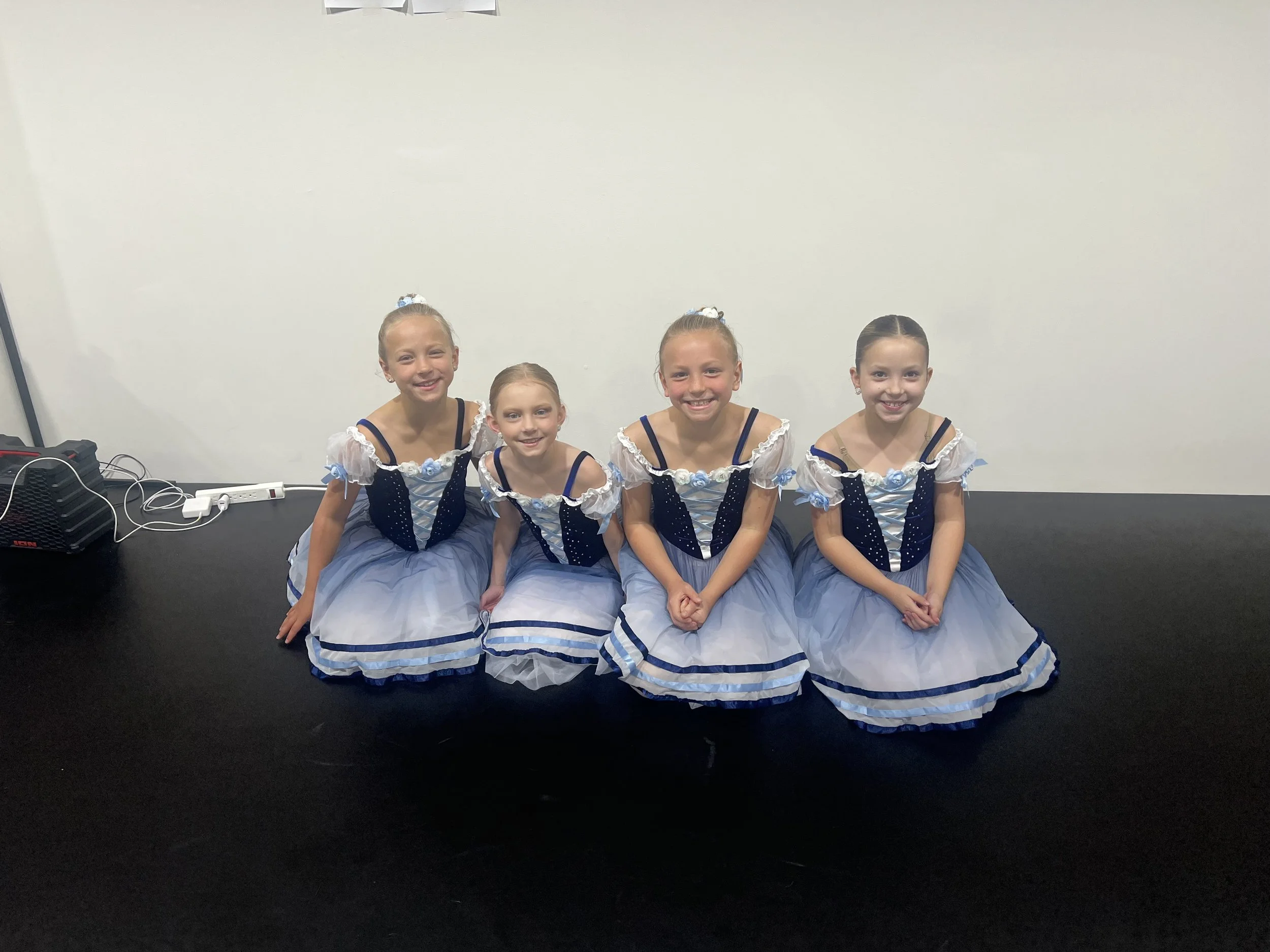
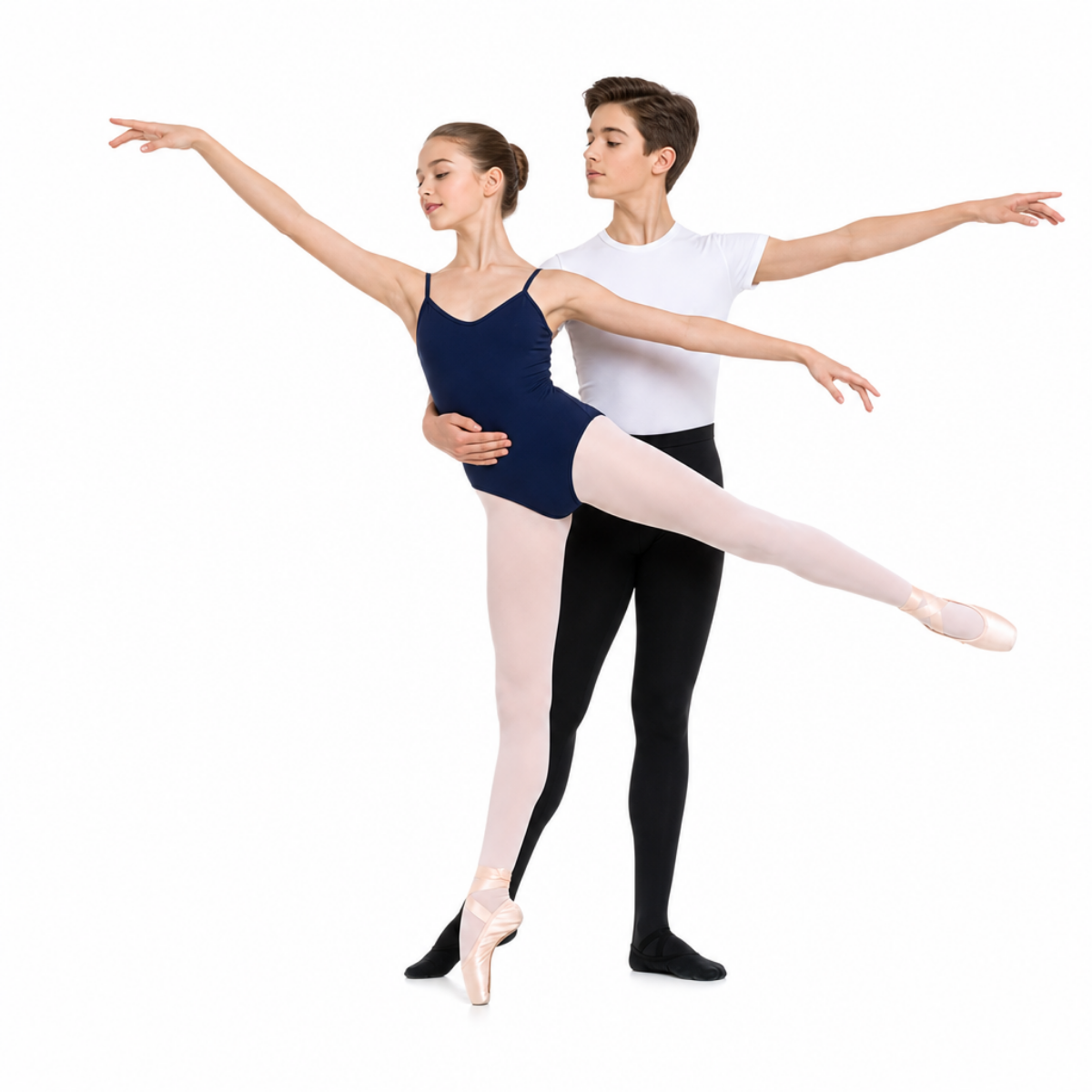
Ballet / Pointe — Solid color leotard, pink tights, ballet shoes
Modern — Solid color leotard, black tights or black leggings, bare feet.
Jazz / Leaps & Turns — Solid color leotard, black tights or black leggings, jazz shoes.
Contemporary — Solid color leotard, black pants, bare feet or dance socks. A fitted long-sleeve athletic top and knee pads are strongly recommended. Contemporary involves floor work, and knees take a beating without them.
Conditioning — Solid color leotard, tight-fitting pants or shorts, bare feet.
Hip Hop — Athletic wear, sneakers (clean and worn only for class).
Dress Code - BOYS
Ballet — Plain fitted shirt , black fitted pants, ballet shoes.
Modern — Plain fitted shirt, black fitted pants, bare feet.
Jazz / Leaps & Turns — Plain fitted shirt, black fitted pants, jazz shoes.
Contemporary — Plain fitted shirt (long-sleeved recommended) bare feet or dance socks. Knee pads are strongly recommended.
Conditioning — Fitted shirt, black fitted pants or shorts, bare feet.
Hip Hop — Athletic wear, sneakers (clean and worn only for class
No attached skirts to the leotard.
Leotards with a skirt sewn on obscure the pelvis. Pelvis placement is one of the most important things a teacher watches. It drives turnout, alignment, and nearly every correction given at the barre.
Attached skirts distract younger dancers, who play with them instead of dancing.
No sports bras worn underneath leotards.
Sports bras are NOT classical ballet attire. A well-made, properly fitting leotard has enough built-in support.
For extra support, please talk with Ms JacLyn for options.
Leotards
All pants, leggings and athletic wear must be fitted to the body. Fitted clothes allow leg lines to be visible for teachers to correct technique.
No wide-leg, flared, or Lululemon-style joggers allowed.
Pants & Athletic WEAR
Ballet shoes, jazz shoes, and hip hop sneakers must be worn indoors only.
Shoes worn outside track dirt and grit onto the studio floor. Dirt, pebbles and rock salt damage the marley’s surface and make it unsafe for the barefoot classes.
Hip hop dancers should change into their sneakers at the studio and change out before they leave
SHOES
Hair buns are an integral part of dance class and training where turning is a core part of instruction. Hair that falls loose mid-class is a distraction and a hazard.
Ballet, Pre-Pointe, and Pointe require hair to be in a proper bun with all hairs pulled away from the face.
Modern, Jazz, and Contemporary highly recommend for hair to be in a bun. Hair is required to be secured and off the face and neck.
All classes teach turning which involves spotting and requires a clear, unobstructed line of sight.
Ponytails or hairstyles that swing into the face instinctively cause bad habits such as chin dropping, eyes closing, or head whipping early.
These habits create technique issues that are difficult to undo later and hold a dancer back for years.
HAIR
PARENT FAQs
-
Each age group has required weekly Company rehearsals and a set of required technique classes through Embody Dance Collective. Exact schedules are shared at the start of each season.
Please note, these are the minimum requirements. Dancers are always encouraged to train as much as the can within their available time commitments.
2026- 2027 Season Training Requirements are determined by a dancer's age group:
Ages 6–7: 1 ballet, 1 jazz, 1 conditioning
Ages 8–10: Choose one of the following options:
Option A: 1 ballet, 1 jazz, 1 conditioning, 1 specialty class (includes contemporary)
Option B: 2 ballet, 1 jazz or contemporary, 1 conditioning
Ages 11 and up: Choose one of the following options:
Option A: 2 ballet, 1 modern, 1 jazz, 1 contemporary, 2 conditioning, 1 specialty class
Option B: 3 ballet, 1 contemporary, 1 jazz or modern, 2 conditioning, 1 specialty class
Specialty classes include: tap, hip-hop, pointe, pre-pointe, acro and modern.
Important: Dancers may only be cast in pieces that match the styles they are actively enrolled in. For example, a dancer must be taking tap in order to compete in a tap piece. This applies to all styles — group dances, solos, duos, and trios.
Pointe & ballet casting note: Being cleared for pointe does not automatically qualify a dancer for casting in pointe group pieces or variations, and taking the minimum required ballet classes does not automatically qualify a dancer for ballet group pieces or variations. Both pointe and ballet casting require a higher number of ballet hours than the minimum requirement. The director will determine eligibility on a case-by-case basis.
Summer Training Requirements Minimums
Your registration form will require dancers to write how much they trained (or will train) over the summer prior to casting. A failure to meet requirements will affect casting for the year.
Requirements by a dancer's age group for 6 weeks of the summer:
Ages 6–7: 1 ballet, 1 jazz, 1 conditioning or specialty class
Ages 8–10: 2 ballet, 2 conditioning, jazz, contemporary
Ages 11 and up: 3 ballet, 3 conditioning, jazz, contemporary, 2 specialty classes*
Specialty classes include tap, hip-hop, pointe, pre-pointe, acro, and modern.
Dancers who participated in outside activities such as summer intensives, National dance convention competitions, master classes, private lessons, etc. can list them under the summer training requirements.
If hours cannot be met through classes, they must be made up through private lessons and approved by JacLyn before auditions.
-
Group Dances
Group dance rehearsals are 45-60 minutes per week. Group rehearsals run during breaks in the Embody Dance Collective schedule during the week (Monday–Saturdays).
Staging rehearsals for group dances start in August.
Solos, Duos. Trios
Solo, duo, and trio rehearsals are scheduled around each dancer's school schedule. Weekday rehearsals begin no earlier than 3:00 PMand end no later than 9:30 PM. Rehearsals may also be scheduled on Fridays or Sundays.
Solos receive one hour of rehearsal each month. Additional practice time can be done through private lessons.
Duos/Trios receive two hours of rehearsal each month. Additional practice time can be done through private lessons.
Sunday Commitment
Sundays are typically used for extra rehearsals when a group dance needs additional work or for private lesson availability.
-
Embody has a mix of required and optional events for company members each season. Our competition schedule is catered toward what each dancer needs most in their journey — whether that's more stage time, exposure to adjudicator feedback, or the experience of competing in pre-professional settings.
Each season, we offer:
4 convention-style competitions
2 ballet-specific competitions (optional — see below)
2 traditional regional competitions
1 national competition (optional — see below)
Which competitions are required will depend on the dancer's current stage of development and the director's recommendation. Participation is determined on a piece-by-piece basis to ensure each dancer is challenged appropriately without being over-committed.
Ballet competitions are optional and are only applicable to dancers who have a ballet variation, are cast in a group ballet piece or contemporary ballet piece. Dancers without ballet repertoire will not attend these events.
The Embody competition season runs from January through April 2027. The season kicks off with a mandatory full-company Dress Rehearsal in January 2027 (exact date TBD), which ensures every piece is stage-ready and gives dancers a chance to run their material in full costume before the first competition.
A tentative schedule will be provided at the start of the season, and dates will be confirmed as soon as they are released by organizers. Dancers are expected to be available for the full weekend of any competition they are cast in, including possible Thursday or Friday performances.
Each dancer's schedule is personalized based on their development and casting. Some events are required; others are optional. Dancers will receive a tailored calendar early in the season.
-
Item descriptionTuition, Fees & Costumes
Participation in Embody Dance Company includes a range of financial commitments. We strive to keep costs transparent and structured while providing a high-quality experience for dancers and families.
Fee Breakdown
Monthly Membership Fee — A recurring monthly fee charged to each dancer. This covers administrative work, company communication, and director time outside of rehearsals (e.g., casting, scheduling, and planning).
Per-Dance Fee — Each group piece a dancer is cast in includes a rehearsal fee only — there is no choreography fee for group dances. Solos, duos, and trios incur an additional choreography fee, which reflects the individualized nature of the work and the extra time involved.
Costume Fees — Each group piece will have a separate costume fee. This includes ordering, fittings, and basic alterations. Costume pricing varies by design and vendor.
Embody Jacket — All dancers are required to purchase the official Embody team jacket, worn at competitions and company events. Cost: $150
Optional Apparel — We are currently developing additional optional apparel items for company dancers. Details on available items and pricing are still being finalized and are subject to change. More information will be shared as it becomes available.
Dress Rehearsal Fee — A one-time fee is charged for the mandatory January Dress Rehearsal, which ensures all pieces are stage-ready before competition season begins.
Competition Entry Fees — Embody registers dancers for all competitions and invoices families at cost (no markup). A $50 teacher fee per dancer is added for each competition to support staff time on site. Competition invoices are issued in four installments throughout the season. All competition fees must be paid in full by the January Dress Rehearsal in order for dancers to continue performing for the rest of the season. Competition fees range based on event. Estimated fees follow per competition:
Solos: $90-130
Duos/ Trios: $60-90
Groups: $50-70 per dance piece
Professional Company Photos — A group photo session is held each fall. The cost is split evenly among all company dancers, and payment is required even if a dancer is unable to attend. Pricing will be announced once details are confirmed. If a dancer misses the photo session, they can make up their individual photos at a later date. However, there will be no refund for the group shots.
Travel & Lodging — Families are responsible for all personal expenses related to competitions, including transportation, hotel, and food.
-
You can register via the Google Form links at the bottom of this page.
Dancers will not be able to audition without this link filled out. The form asks important questions such as dancer's goals, amount of participation, preferred styles, etc.
Once a dancer auditions and makes the team, a link with more information will be sent with pricing, schedules, and other important information. This form will be due before Casting Days.
This year there are two audition options — Company Audition Days or a private audition. Select the proper Google Form and you will receive details on next steps.
-
Registration must be completed before attending. All dancers should plan to arrive 30 minutes early to stretch and warm-up.
Company Audition Days are divided by age group.
What should my dancer wear to auditions?
Black leotard, pink tights, and black leggings (girls)
Black T-Shirt and Black Bottoms (boys)
Ballet shoes, pointe shoes (if applicable), jazz shoes, and contemporary dance socks (or barefoot)
Hair in a bun
Minimal jewelry
What should I bring to auditions?
Water bottle
Pins for audition number
-
Group Casting Weekend
Casting for group pieces, duos, and trios takes place on weekends following auditions. Dancers will be called to attend sometime between 9:00 AM – 5:00 PM. Families should keep this full weekend available. Inability to attend casting days WILL affect casting for the year.Because dancers may be cast in different combinations for different pieces, this structure promotes adaptability, collaboration, and the ability to work with a wide range of peers throughout the season.
-
Dancers may not begin Embody Dance Company activities prior to formal audition and contract signing.
Dancers who audition and commit will be able to begin solo choreography, may begin duos or trios, and will be considered for a small group piece that is not available to dancers who audition at a later date.

“I have known Jaclyn for about seven years now and she has been nothing but pure inspiration. She is nothing far from an amazing teacher and human-being. Jaclyn dedicates herself to the studio and the company all the time and she is so committed to teaching kids not only about dance and the technique behind it, but how to be a family with each other and support one another. Jaclyn is everyone’s biggest fan and there is never a moment where she isn’t proud of us. I am so grateful and inspired by Jaclyn because she is a remarkable choreographer and teacher. I aspire to be Jaclyn because she is such a great role model and sets an amazing example of what every dance instructor should be like. All of us kids consider her our best friend. Jaclyn is an inspiring person who helps dancers follow and achieve their dreams and goals and creates the passion for students to love what they do. The inspiration Jaclyn has provided has pushed me to be the best dancer I can be and no amount of gratitude will ever be able to tell her how thankful I am for her inspiration and encouragement. Without Jaclyn and her support, I would never be where I am today and I wouldn’t have such an amazing dance teacher and mentor to help me through my dance career.”
-Hanna Williams
Come Dance With Us
If you're interested in dancing with us, complete this form to begin your journey with Embody.